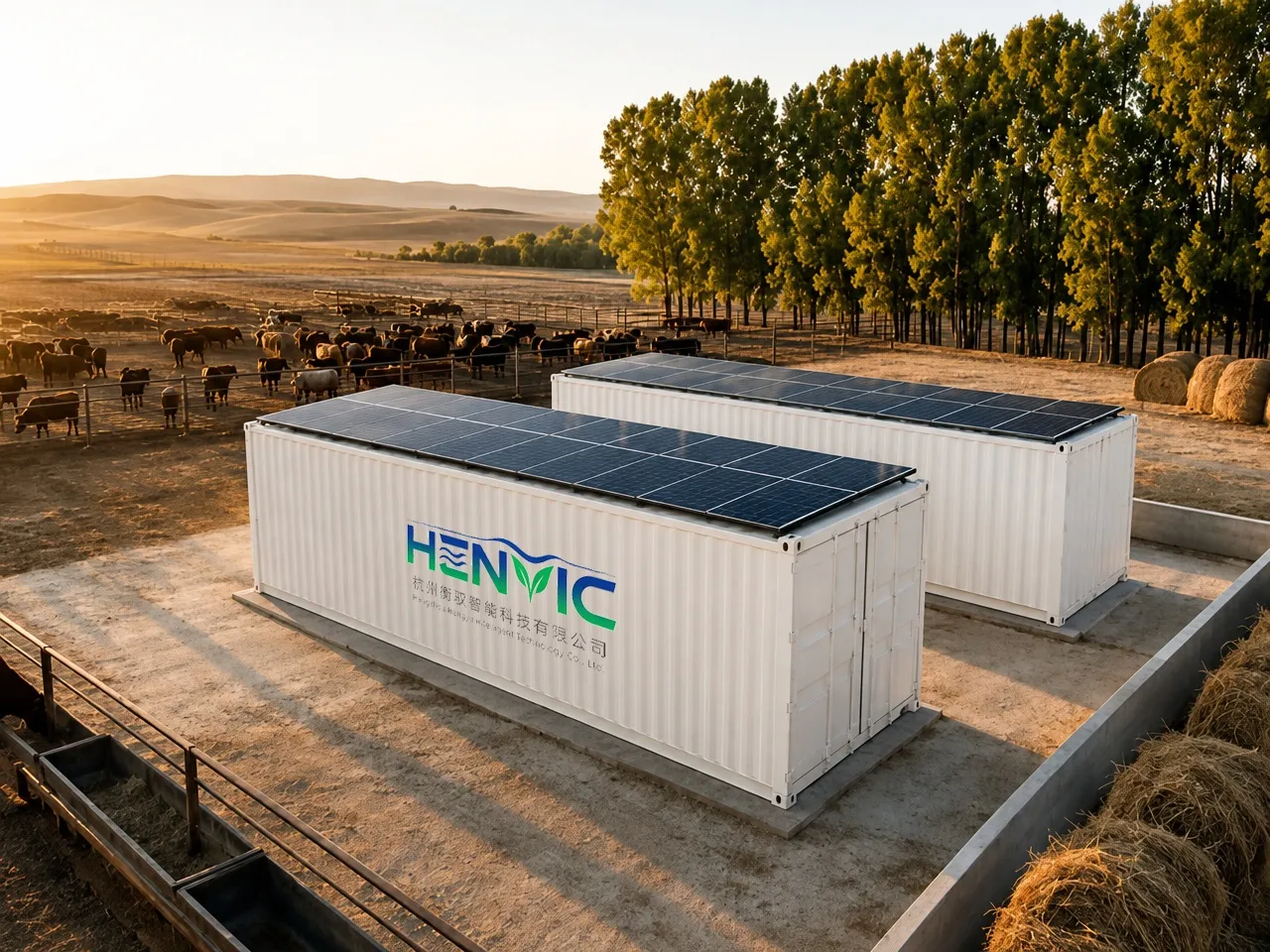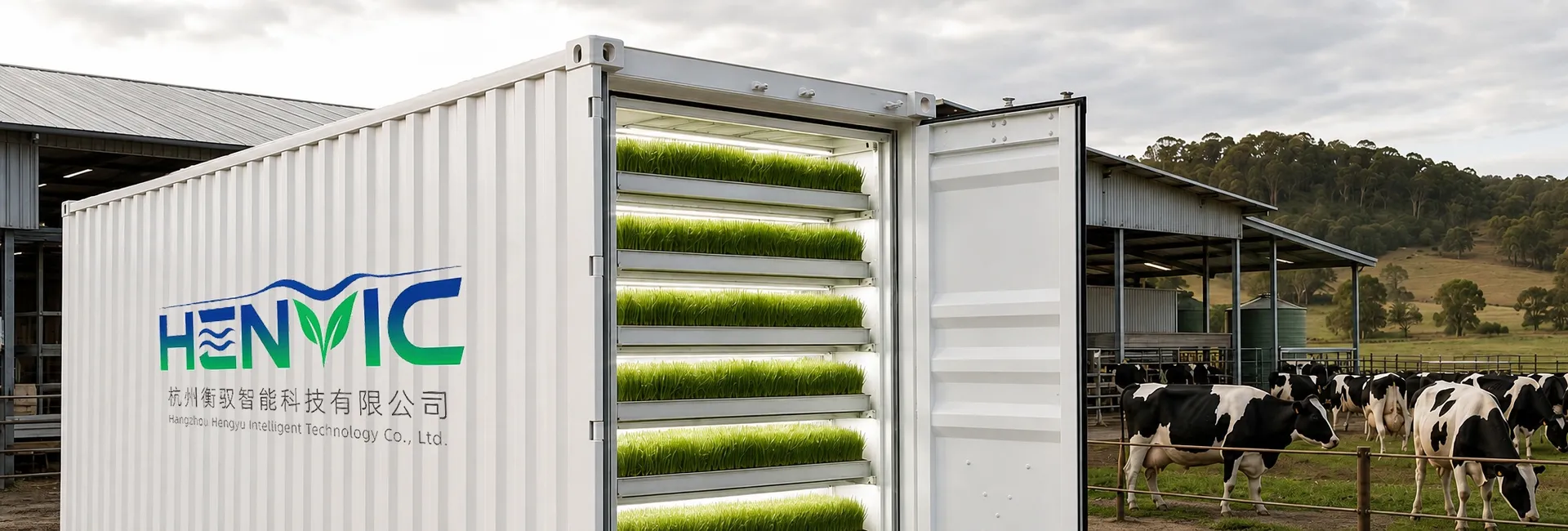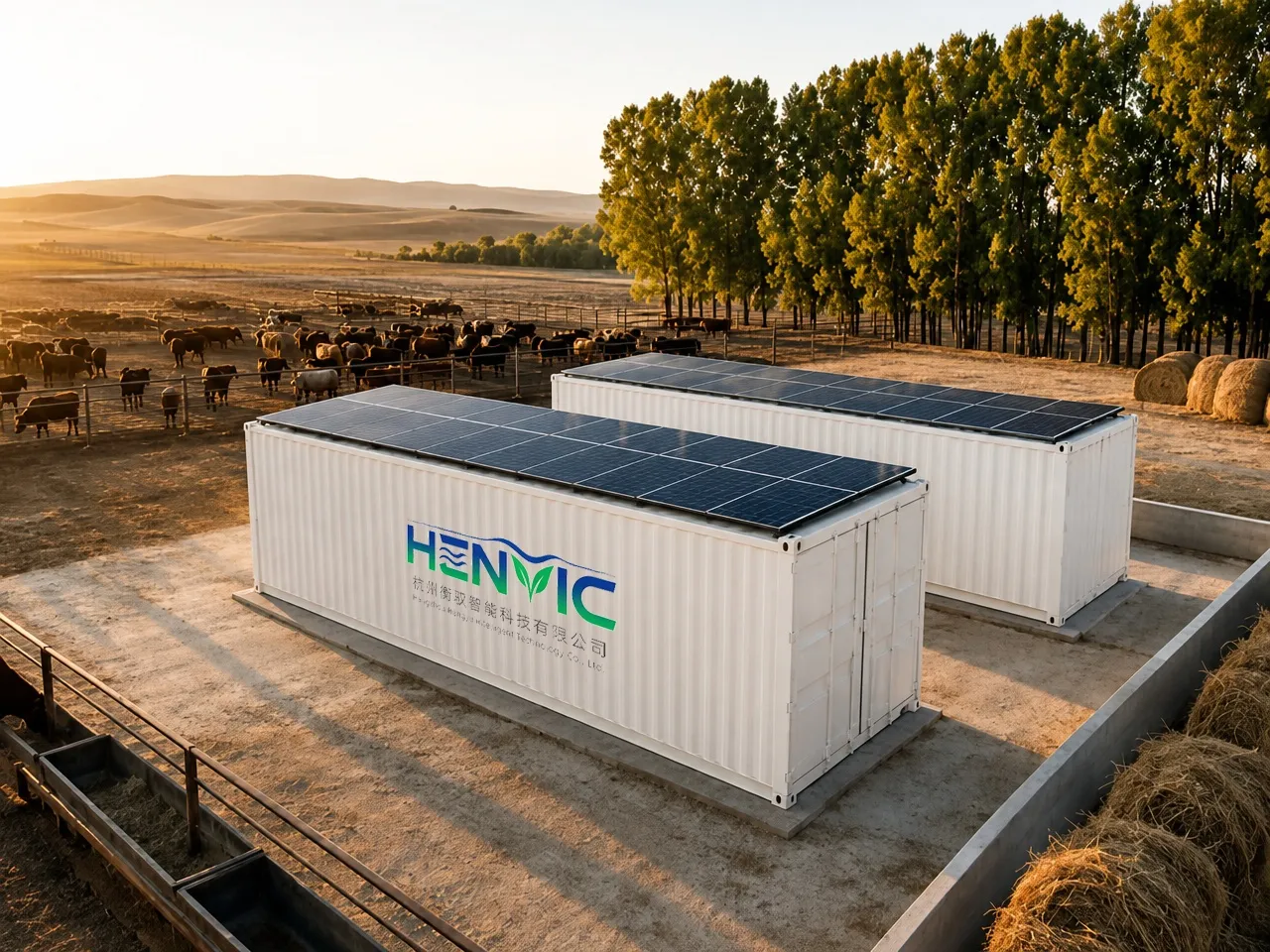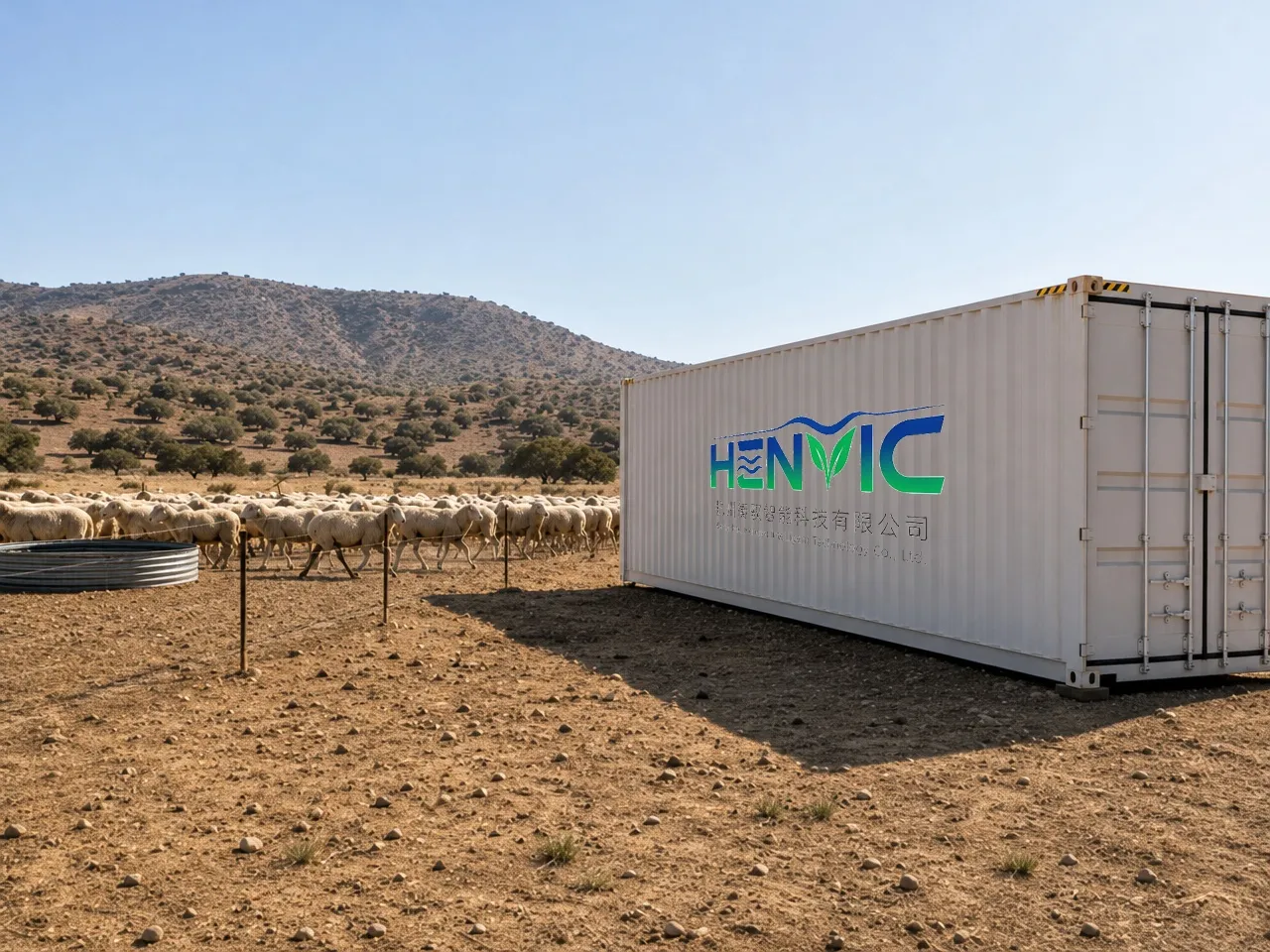
A smart container farm is what happens when you take the oldest idea in agriculture — grow plants under controlled conditions — and hand the controls to a machine that never sleeps. Physically, it is still a shipping container: about 12 meters long, 2.4 meters wide, 2.9 meters high, stacked with racks and bathed in magenta light. What makes it smart is not the hardware but the loop: sensors perceive, algorithms decide, actuators act, and the system learns from what happens next. The container stops being a greenhouse and becomes a feedback system that happens to grow food.
From Controlled Environment to Closed Loop
Traditional controlled environment agriculture (CEA) is about holding conditions steady. A thermostat keeps temperature near a setpoint; a timer switches lights on and off. The smart container farm goes further. It treats the growing environment as a dynamic system with state, and it manages that state continuously rather than passively.
The distinction matters. A conventional plant factory keeps temperature at 22°C because someone decided 22°C was right. A smart farm keeps temperature at whatever value optimizes growth given current light intensity, humidity, CO₂ level, crop stage, and projected harvest date — and it revises that decision every few minutes. The setpoint is no longer a fixed number. It is an output.
This is the conceptual core: the container's job is not to reproduce an ideal climate, but to run a control problem.
The Anatomy of a Thinking Farm
A smart container farm is best understood as layers, each dependent on the one below.
The physical layer carries the crops. Multi-tier hydroponic, aeroponic, or substrate racks multiply growing area within a fixed footprint. Nutrient solution circulates, is sterilized, and is reused. The sealed shell excludes pests, which is why pesticide use approaches zero and why the whole system can be certified organic in many jurisdictions.
The perception layer is where intelligence begins. Temperature, humidity, CO₂, light intensity and spectrum, nutrient solution EC and pH, dissolved oxygen, water level, airflow — all continuously measured. Increasingly, the perception layer also includes vision: cameras that image the canopy and use computer vision to estimate leaf area, detect discoloration, spot pests or disease early, and even count flowers or fruit. This is the layer that turns a greenhouse into something that can see.
The control layer closes the loop. Edge controllers or cloud platforms ingest sensor streams, compare them against crop models, and drive HVAC, dehumidifiers, LED dimming, CO₂ injection, pumps, and dosing systems. Modern implementations lean on model predictive control (MPC) and machine learning: rather than reacting to deviations after they occur, the system anticipates them. It knows that raising light intensity will add heat and transpiration load, so it pre-adjusts cooling and dehumidification rather than chasing the consequences.
The learning layer is what separates smart from merely automated. Every cycle generates data — light recipes, climate trajectories, yields, quality metrics. That data feeds back into the models. Over successive harvests, the system converges on recipes tuned to the specific cultivar, the specific container, and the specific market's quality expectations. A farm that has run for two years is not the same machine it was on day one.
The interface layer is what the operator actually touches. Dashboards, mobile apps, alerts. The grower's role shifts from manual labor to supervision: reviewing anomalies, adjusting strategy, deciding when to harvest. One person can oversee multiple containers remotely, which changes the labor economics fundamentally.
Why "Smart" Is Not Just Marketing
It is fair to ask whether the intelligence adds real value or just adds cost. The answer depends on what it replaces.
It replaces guesswork. Conventional growing relies on experience — a grower feels whether the crop needs more light or less water. Experience is valuable but does not scale, and it cannot run at 3 a.m. Sensors and models encode that judgment into something replicable and tireless.
It replaces waste. Precise dosing and climate control mean nutrients, water, and energy are applied where and when they are needed. In a system where electricity is the dominant cost, shaving a few percent off lighting and cooling through smarter scheduling has direct financial impact.
It replaces risk. Early detection of disease or equipment failure — a failing chiller, a drifting pH sensor — can be the difference between a minor correction and a lost cycle. Continuous monitoring turns catastrophic failures into routine maintenance.
It enables things that were previously impossible. Dynamic spectrum control that shifts light quality across the growth cycle to steer flavor or metabolite content. CO₂ enrichment synchronized with stomatal opening. Deficit irrigation timed to the hour. These are not refinements of traditional practice; they are capabilities that only exist when every variable is measured and every actuator is programmable.
The Honest Constraints
The same rigor applies to the limitations.
Energy remains the binding constraint. Lighting, cooling, and dehumidification dominate operating cost. Intelligence can optimize energy use, but it cannot repeal thermodynamics. The model makes sense where electricity is affordable or where the crop commands a premium — and struggles where neither holds.
Crop range is narrow. Leafy greens, herbs, microgreens, and some berries fit the format. Staple grains do not, and are not close to doing so. Claims that container farms can feed cities are overstated; the model supplies freshness and consistency, not calories at scale.
Complexity is a real cost. Sensors drift, models misjudge, software has bugs. A smart farm is a system that must be maintained as a system. Many failures in the sector trace to operational complexity rather than horticultural difficulty.
Economics are crop- and location-specific. A container farm near a wealthy urban market selling premium greens has a plausible case. The same container in a region with cheap field produce and expensive electricity does not. The technology does not override the market.
Where It Fits
The strongest applications are specific: urban and peri-urban fresh supply where food miles and freshness matter; remote and extreme environments — polar stations, offshore platforms, disaster relief — where fresh produce is otherwise unobtainable; propagation and seedling nurseries where uniformity improves downstream yields; research and pharmaceutical crops where control over metabolites outweighs cost per kilogram. Education and demonstration round out the list, because a container farm is an unusually legible object — people can walk inside the system that feeds them.
Where It Is Heading
Several directions are converging. Sensing is getting cheaper and richer, with hyperspectral and multispectral imaging moving from labs into production containers. Models are getting better, moving from rule-based control toward reinforcement learning that discovers non-obvious operating strategies. Lighting is becoming fully dynamic, treating spectrum as a control variable rather than a fixed recipe. Energy integration — solar, waste heat, grid-responsive scheduling — is improving both cost and carbon profile. And fleet management is emerging: not one smart container, but dozens coordinated across a city, sharing recipes, load-balancing energy, and learning collectively.
The container farm was never going to replace agriculture. What it can do is something narrower and more interesting: turn the growing of high-value, perishable crops into a measurable, controllable, and continuously improving industrial process. The steel box is the body. The sensors are the senses. The algorithms are the judgment. What the system ultimately produces is not just lettuce — it is knowledge about how to grow it better next time.