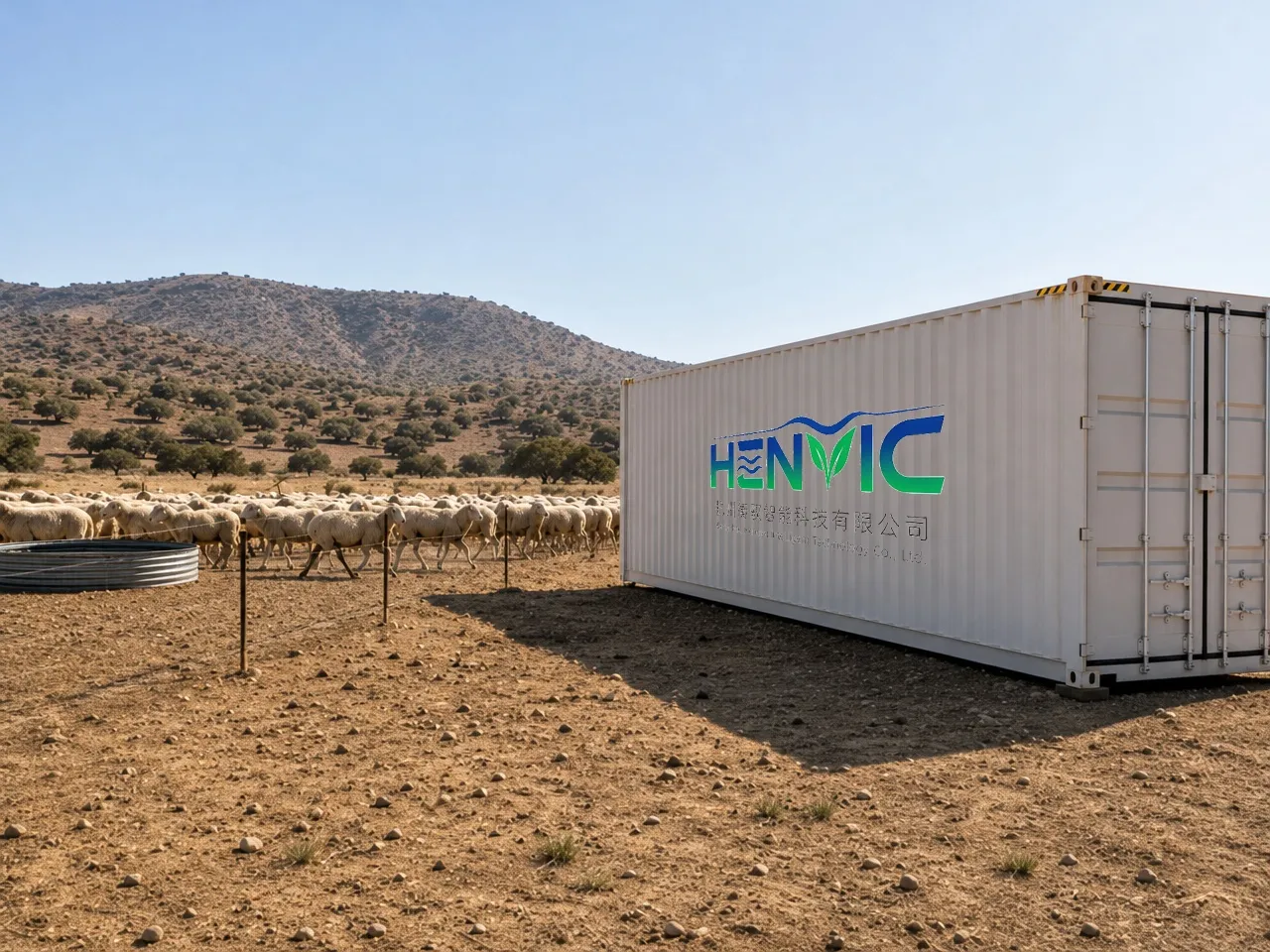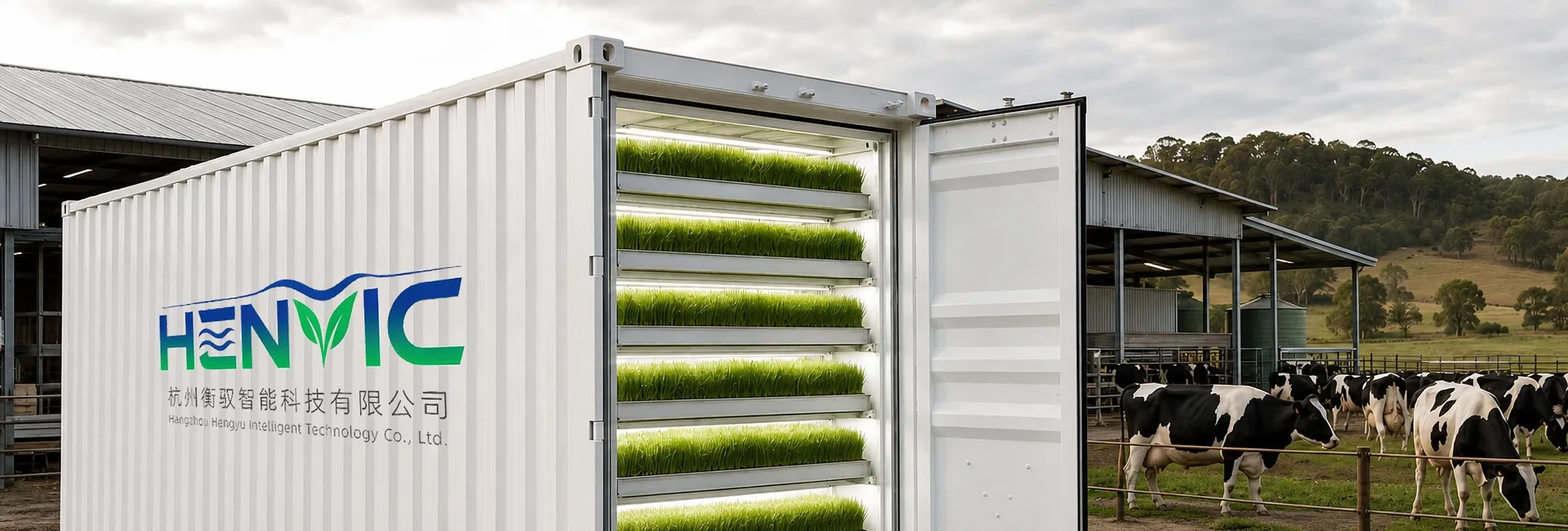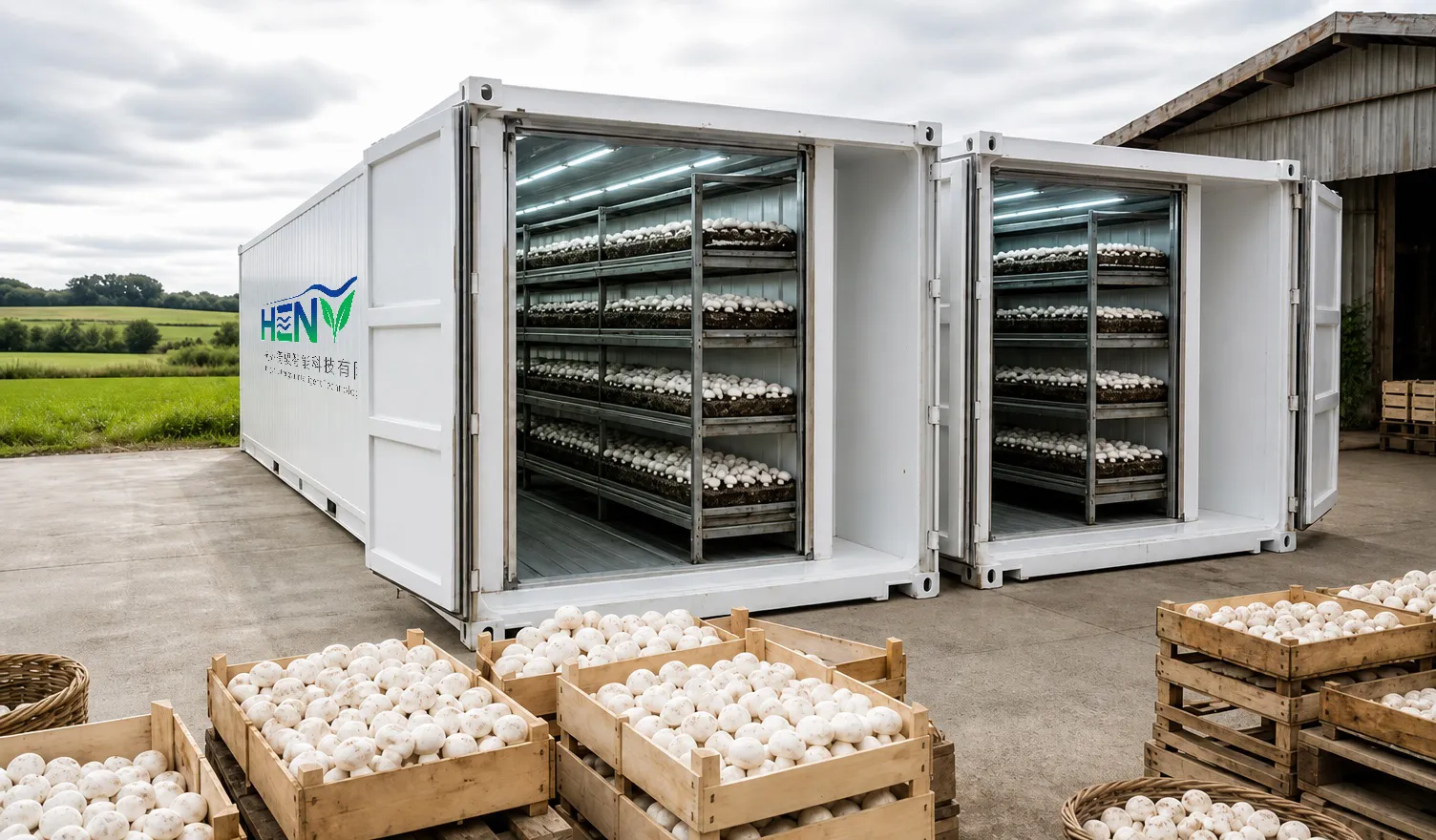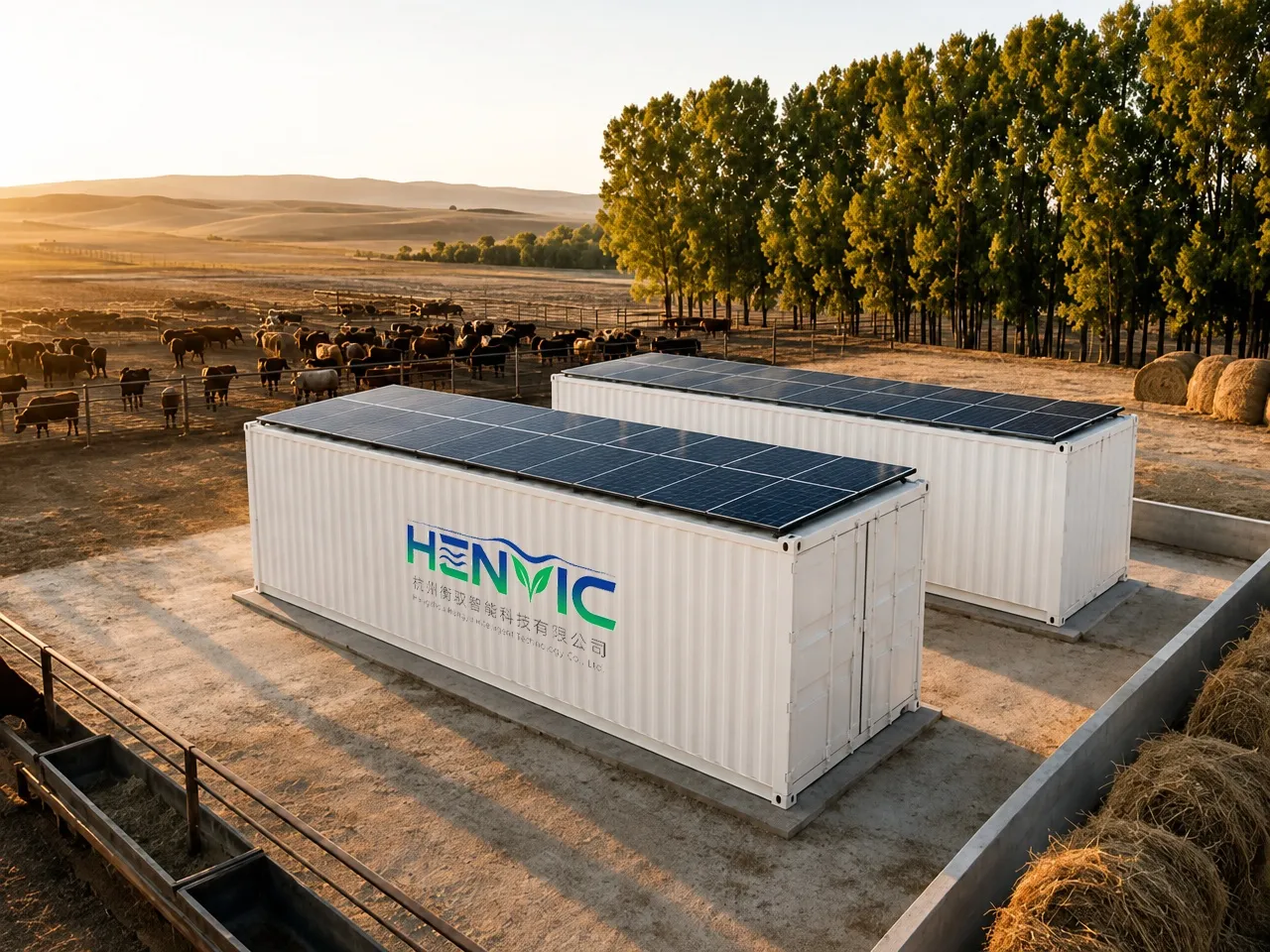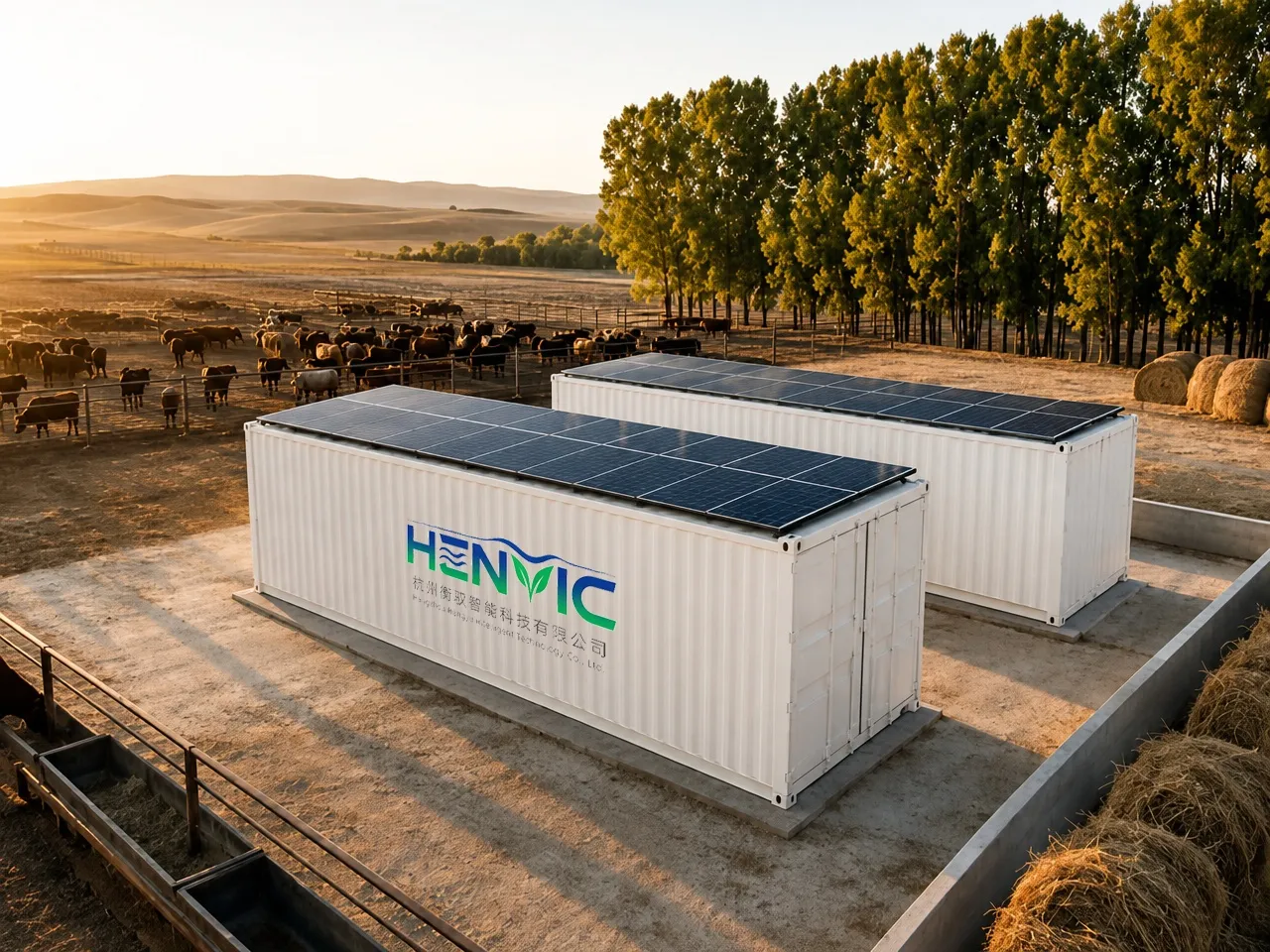
A container farm is best understood as a single engineering decision carried to its conclusion: replace the sun, the soil, the weather, and the season with electricity, plumbing, and control software. Take a standard 40-foot high-cube shipping container — roughly 12 meters long, 2.4 meters wide, and 2.9 meters high — seal it, insulate it, stack racks inside, hang LED arrays above each tier, circulate nutrient solution to exposed roots, and hold every environmental variable inside a narrow band. What was a box for cargo becomes a facility for photosynthesis. The premise is simple; the engineering logic behind it is anything but.
The Core Trade: Sunlight and Land for Electrons and Information
Every controlled environment agriculture (CEA) system makes the same fundamental exchange. A field receives sunlight, rain, soil nutrients, and arable land for free, and in return accepts unpredictability — drought, frost, pests, seasonality, and a harvest window dictated by nature. A container farm inverts that bargain. It pays for light, cooling, water circulation, and control systems, and in exchange it obtains something a field can never offer: complete authority over the growing environment.
That exchange defines everything that follows. It explains why the model produces leafy greens and herbs rather than wheat. It explains why electricity, not labor or seed, is the dominant cost. And it explains why the technology is described as turning agriculture into an industrial process — because once light, temperature, humidity, CO₂, and nutrient delivery are all programmable, plant growth stops being an agricultural outcome and becomes a setpoint.
The "steel box" framing is not merely poetic. The container is a standard, transportable, stackable, globally recognizable unit. That standardization is an engineering asset: it means the growing system can be manufactured in one place, shipped anywhere with power and water, and deployed in weeks rather than years. Agriculture normally requires land, climate, and infrastructure to converge. A container farm requires a concrete pad and an electrical connection.
Water Without Soil: The Growing Substrate Question
Remove soil and you must answer a new question: how does the root zone receive water, oxygen, and nutrients? The three common answers reflect different trade-offs between efficiency, cost, and failure risk.
Deep water culture (DWC) floats plant roots directly in an oxygenated nutrient solution. It is simple, forgiving, and cheap to build — but the large reservoir volume means it responds slowly to changes in concentration, and root disease, once established, spreads through the shared water.
Nutrient film technique (NFT) trickles a thin film of solution through inclined channels, bathing the lower portion of the root mass. Roots receive both water and air, and the shallow film lets growers observe and adjust quickly. The vulnerability is the film itself: a pump failure or a channel blockage can dry an entire tier within hours, because there is no reservoir buffer.
Aeroponics suspends roots in air and mists them with fine droplets on an interval. Water and nutrient efficiency reach their practical maximum because roots are never submerged and oxygen is unlimited. The cost is complexity — nozzles clog, mist cycles must be tuned, and the system has the least tolerance for interruption of any of the three.
Layered on top of these choices is the rack structure. Because the footprint is fixed, yield scales strictly with the number of tiers. Vertical stacking is not a stylistic preference; it is the mechanism by which a 30-square-meter floor becomes a much larger growing area. It also concentrates the engineering difficulty, because every tier needs its own light, airflow, drainage, and access path — and heat, humidity, and CO₂ are no longer uniform from floor to ceiling.
Light: Turning the Sun Into a Parameter
The lighting system is where container farming diverges most sharply from greenhouse practice. A greenhouse uses supplementary light to top up what the sun provides. A sealed container has no sun at all — the LED array is the entire energy source for photosynthesis, and that changes the design problem completely.
Two physical quantities dominate. Photosynthetic photon flux density (PPFD) measures how much usable light reaches the canopy per unit area per second — this determines the rate at which photosynthesis can proceed. Daily light integral (DLI) integrates that intensity over the photoperiod, and it is DLI, more than instantaneous intensity, that governs biomass accumulation. Growers therefore have two independent levers: raise intensity, or extend the photoperiod. Both have consequences.
The second design variable is spectrum. Chlorophyll absorbs most strongly in the blue and red regions, which is why early plant LEDs were predominantly red-blue combinations. That remains the most electrically efficient way to deliver photosynthetic energy. But spectrum also carries signaling information, not just energy. Blue light influences stomatal opening and compact, stocky morphology. Far-red can trigger shade-avoidance responses and influence extension growth. Ultraviolet and specific blue fractions can stimulate the production of secondary metabolites — anthocyanins, flavonoids, and aroma compounds — which is how growers deliberately manipulate color, flavor, and nutritional density rather than merely maximizing mass.
This is the conceptual heart of the steel box: in a field, the sun is a constant that plants adapt to. In a container, the light environment is an adjustable input that the operator sets to achieve a specified product. Spectrum, intensity, photoperiod, and even the timing of spectral shifts across the growth cycle become recipe parameters. Photosynthesis stops being weather and becomes process control.
Climate: Managing the Consequences of Your Own Lighting
Enclosing the growing space cuts both ways. It excludes pests, airborne pathogens, and weather — which is why container farms can operate with minimal or no pesticide and why the product is reliably clean. But a sealed box loses the atmosphere's free thermal buffer, and it must dissipate every watt of energy that enters it as light. Nearly all of the electrical energy delivered to the LEDs ends up as heat, and the plants themselves add transpiration — water vapor released through stomata as a byproduct of gas exchange.
The result is a climate control load driven largely by the lighting system's own design. Raise PPFD to speed growth, and you increase heat load, transpiration, and the demand on cooling and dehumidification. This coupling is the reason climate control cannot be designed after the lighting is chosen; the two are a single thermodynamic problem. Temperature, relative humidity, vapor pressure deficit (VPD), CO₂ concentration, and airflow must all be held in bands narrow enough to keep stomatal behavior, transpiration rate, and photosynthetic rate predictable.
CO₂ enrichment deserves particular mention because it is one of the few interventions that can raise growth without raising light. In a sealed container, CO₂ is consumed during the photoperiod and can fall below ambient, throttling photosynthesis. Injecting and monitoring CO₂ offsets that, but the gas is also a safety concern and a cost, and it interacts with ventilation strategy — you cannot simultaneously enrich CO₂ and flush the space with outside air.
Airflow is the least glamorous and most frequently underestimated variable. Without it, leaves inside a dense canopy sit in a stagnant boundary layer of their own making, where humidity approaches saturation, transpiration stalls, and the microenvironment becomes ideal for fungal growth. Vertical rack systems intensify the problem because each tier can develop its own microclimate, and the top of the box will always be warmer than the bottom.
Perception and Control: Closing the Loop
Sensors convert the system from a set of assumptions into a measurable state. Temperature, humidity, CO₂, PPFD at canopy level, pH, electrical conductivity (EC) of the nutrient solution, dissolved oxygen, water level, and flow rates are the standard measurements. pH and EC are not optional instrumentation — they jointly determine nutrient availability, and a drift in either can render a perfectly balanced nutrient recipe inaccessible to the roots. Vision systems are increasingly part of the suite, using canopy imaging to estimate leaf area, detect discoloration, and flag early disease or pest pressure.
Control sits above perception. At its simplest, a controller maintains setpoints with feedback — a thermostat writ large. At its more ambitious end, model predictive control and machine learning anticipate rather than react: knowing that a planned increase in lighting will add heat and humidity, the controller pre-adjusts cooling and dehumidification instead of waiting for the deviation to appear. Because the container is a closed system with known dynamics, it is unusually well suited to this kind of predictive control — far more so than a greenhouse, where the environment beyond the glass is uncontrollable and constantly changing.
The operator's role shifts accordingly, from doing to supervising. One person can oversee multiple containers, review anomalies, adjust recipes, and decide harvest timing remotely.
Water and Nutrients: The Recirculation Loop
Hydroponic and aeroponic systems recirculate: solution is sterile-filtered, replenished, and reused rather than released. That is where the water efficiency claim originates — consumption is typically a small fraction of conventional field irrigation, which makes the model attractive in water-scarce regions and for crops grown far from freshwater sources. Nutrient use follows the same logic: what the plants do not take up stays in the loop rather than leaching into groundwater.
Recirculation has a price, though. A closed loop accumulates its own problems. Pathogens, if introduced, are distributed throughout the system. Imbalanced ion uptake gradually shifts the solution's composition, since plants do not absorb all ions at equal rates; EC measures total concentration but not the ratio, so the recipe can drift out of balance while the headline number looks correct. Managing a recirculating system means managing chemistry over time, not merely filling a tank.
The Honest Constraints
Rigor requires stating where the model does not work.
Energy is the binding constraint. Lighting, cooling, and dehumidification dominate operating cost. The system trades free sunlight and free climate for purchased electricity, so its economics are extremely sensitive to local power prices and to the value of the crop. This also links the model's carbon footprint directly to the local grid mix — a container farm on a coal-heavy grid has a very different environmental profile from one drawing on hydroelectric or nuclear power.
The crop range is narrow. Leafy greens, herbs, microgreens, and some berries fit the format: short, fast-cycling, high-value, and low-growing. Staple grains and calorie-dense crops are not economically viable here and are not close to being so. Anyone claiming container farms can feed a city is overstating the case; the model supplies freshness, consistency, and quality, not calories at scale.
Complexity is a real cost. Sensors drift, controllers misjudge, chillers fail, software has bugs. Many failures in the sector trace to operational complexity rather than horticultural difficulty. A container farm must be maintained as a system, and that requires a genuinely different skill set from conventional agriculture: electrical, refrigeration, nutrient chemistry, and data monitoring.
Capital intensity and scale. The upfront investment is substantial, and scaling means adding containers — which means multiplying HVAC and electrical infrastructure. Industrial processes usually improve economically with size; adding discrete containers does not automatically deliver the same effect.
Where the Model Fits
The credible applications are specific. Urban and peri-urban fresh supply, where food miles and freshness carry real value. Remote and extreme environments — polar stations, offshore platforms, military installations, disaster relief — where fresh produce is otherwise unavailable at any price. Propagation and seedling nurseries, where controlled conditions improve uniformity before transplant. Research and pharmaceutical crops, where precise control over secondary metabolites outweighs cost per kilogram. And education, because a container farm is an unusually legible object: people can walk inside the system that feeds them and see every input and output at once.
What the Steel Box Actually Demonstrates
The container farm is not a replacement for agriculture and was never going to be. Its value lies elsewhere. It demonstrates something specific and genuinely interesting: that photosynthesis — the oldest and most weather-dependent process in human food production — can be disassembled into measurable inputs and controlled as an industrial system. Light becomes a spectral recipe. Climate becomes a control loop. Water becomes a recirculating circuit. Soil becomes an engineered root zone.
Whether that constitutes a solution, a niche, or something in between depends entirely on numbers — on the price of a kilowatt-hour and the market price of the crop. And that is, fittingly, exactly the kind of question a container farm is designed to answer with data: not just by growing the lettuce, but by measuring precisely what it cost to grow it that way.